Internal corrosion behaviour of Nigerian gas pipelines: a CFD simulation approach
Keywords:
Computational Fluid Dynamics (CFD), Internal Corrosion, Multiphase Flow, Corrosion Mitigation, Turbulence EffectsAbstract
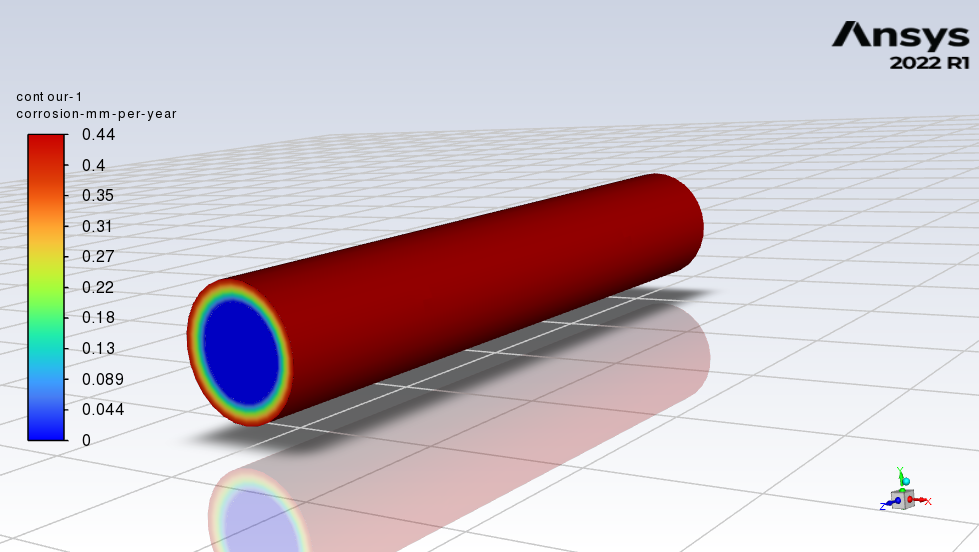
Internal corrosion poses a critical threat to the reliability and safety of oil and gas pipelines in Nigeria, contributing significantly to operational downtime, environmental hazards, and maintenance costs. This study investigates internal corrosion behavior within Nigerian gas pipelines, focusing on a segment of the Ajaokuta–Kaduna–Kano (AKK) corridor, using Computational Fluid Dynamics (CFD) simulations. The simulation incorporates multiphase flow conditions, fluid composition (85% crude oil, 10% Natural Gas Liquids, 5% water and impurities), and operational parameters representative of Nigerian inland pipelines. Results reveal that high-velocity zones (12.91–16.14 m/s) and regions of elevated turbulence intensity (1.26–2.07 m²/s²) correlate with peak corrosion rates ranging from 0.13 mm/yr to 0.44 mm/yr. These findings identify flow-induced shear stress and localized turbulence as major drivers of uniform internal corrosion. Specific mitigation strategies are proposed, including targeted dosing of amine-based inhibitors (10–25 ppm) and optimized pigging operations at 2–3 month intervals. The study offers Nigeria-specific insights into corrosion dynamics and demonstrates the value of CFD modeling for proactive pipeline integrity management. Experimental validation is planned for future work to enhance the predictive reliability of the model.