Environmental Impact and Optimization of Bio-Hydraulic Fluid from Biobased oil and Friction modifiers (Eggshell and Snail shell)
Keywords:
Bio-hydraulic fluid, Friction modifiers, FT-IR, Optimization, Palm oilAbstract
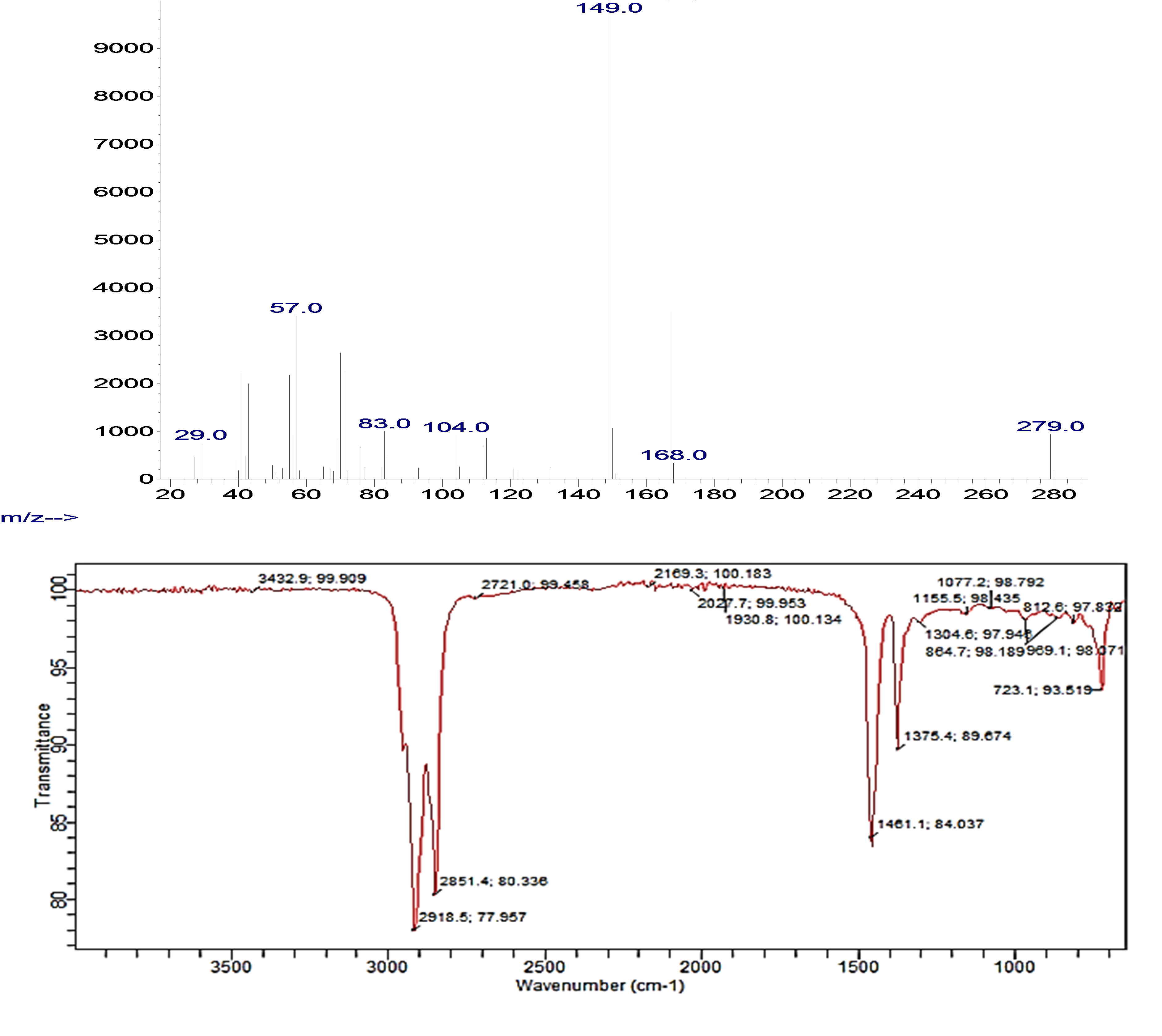
This work investigated the use of eggshells and snail shells as bio-friction modifiers compared to graphite in formulating bio-hydraulic fluids from palm oil, to improve environmental sustainability. Glycerol was produced through the transesterification of palm oil and characterised using Gas Chromatography-Mass Spectrometry (GC-MS). Graphite, eggshells, and snail shells were characterised using X-ray Diffraction (XRD). Three samples of separately formulated bio-hydraulic fluids from graphite, eggshells, and snail shells were characterised to ascertain the values of the pour point, flash point, viscosity, and biochemical oxygen demand. The functional groups of the bio-hydraulic fluids were identified using Fourier Transform Infrared Spectroscopy (FTIR) and optimised using Response Surface Methodology (RSM). The GCMS analysis of glycerol identified key chemical constituents (including dihydro-2-methyl-3-furanone, neopentyl glycol, and linoleic acid) essential for lubricity. The XRD analysis revealed eggshells and snail shells possessed mineralogical properties (calcite and aragonite respectively), confirming their suitability as friction modifiers. FTIR spectra of the bio-hydraulic fluids identified key functional groups (alkanes, heteroatoms) demonstrating suitability for hydraulic applications. The optimised bio-hydraulic fluid viscosity and its process conditions were given as: dynamic viscosity 34.78, 31.95, 33.48 cP; glycerol/methanol ratio 20:20:20; eggshell dosage 0.6/0.6/0.6 g; temperature 60/60/60°C; and time 30/30/30 min, for graphite, eggshell, and snail shell respectively. Achieving predictive accuracy (R² ≈ 0.99), with a margin of error of less than 5%, shows that the quadratic model generated is accurate in prediction. The physicochemical properties of the formulated fluid were: pour point -44.8, -41.7, -40.5°C; flash point 257, 249, 246°C; biochemical oxygen demand (BOD) 8.23, 8.04, 8.11 ppm, for graphite, eggshell, and snail shell respectively. The formulated bio-hydraulic fluids perform better in pour point, flash point, and BOD compared to mineral-based fluids, while matching bio-based fluid standards for viscosity. These properties, validated by ASTM standards, confirm the potential of palm oil, eggshell, and snail shell as sustainable eco-materials for hydraulic fluid applications.