Bio-plastic from Potato and Bambara Nut Shell Agro-Waste
Keywords:
Potato starch, Bambara nutshell, Agro-waste, Bio-plastic, Mechanical Properties, BiodegradabilityAbstract
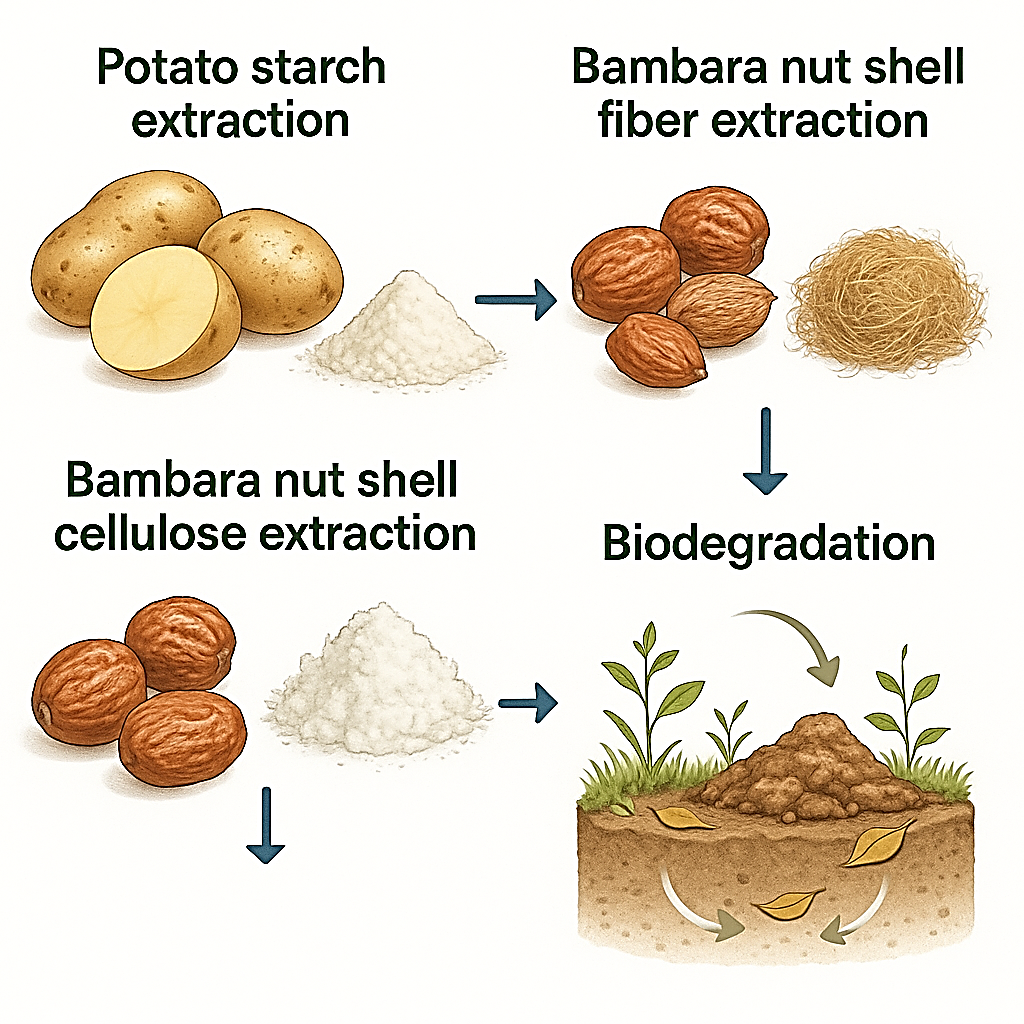
Plastic garbage has been deposited into the ecosystem as a result of anthropogenic activities. There is an urgent need to produce bio-plastics because plastics are not biodegradable and have a negative impact on the environment. One natural resource that can be utilized in the manufacturing of bio-plastics is starch. However, the brittleness of starch-based bio-plastics is a drawback. The study emphasizes the feasibility of utilizing cellulose derived from bambara nutshell agro-waste as an eco-friendly reinforcement in conjunction with potato starch for the synthesis of bio-plastic in order to overcome this constraint. It was studied how to produce and characterize bio-plastic from potato starch reinforced with 2.5, 5, 7.5, and 10 weight percentages of cellulose that was taken from agricultural waste manufactured from bambara nutshells. The main goal was to improve potato starch's mechanical qualities in order to overcome the drawbacks of pure starch materials. In order to create bio-plastic, cellulose was extracted from bambara nutshell fibers using 5% NaOH and combined to a potato starch matrix. Increases in cellulose loading were found to improve the mechanical properties of potato starch. When bambara nutshell cellulose was added to weight percentages, the bio-plastics' tensile, water-absorbing, and biodegradable qualities improved. Tensile strength increased significantly from 15 MPa to 50.25 MPa, elongation percentage dropped from 35% to 5%, Young's modulus rose from 50 MPa to 200 MPa, water absorption decreased from 15.93% to 11.48%, and biodegradability increased from 29.81% to 50.69%. By lowering reliance on non-renewable resources, the study has shown that bambara nutshell cellulose/potato-starch is a practical and sustainable method for producing bio-plastics, which offer an alternative to traditional plastics and promote environmental sustainability.