Predicting and Optimizing the Impacts of Chipped Rubber Tire (CRT) On Concrete Using Response Surface Methodology
Keywords:
Chipped Rubber Tire, Concrete, Density, Response Surface Methodology and Water AbsorptionAbstract
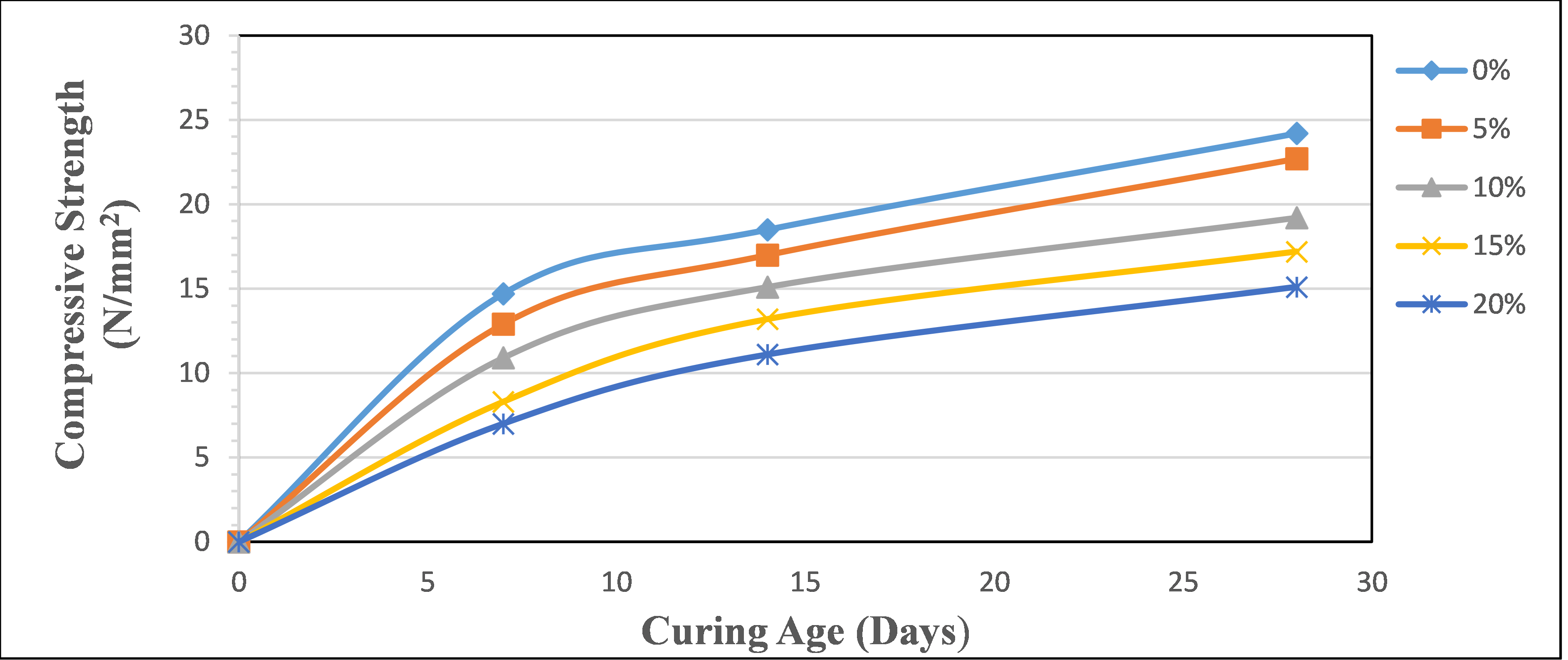
The recycling of waste tire rubber in concrete can reduce reliance on raw materials, contributing to the economic efficiency and sustainable progress of the construction sector. This study aimed to utilise Chipped Rubber Tire (CRT) as a partial substitute for coarse aggregate in the production of rubberised concrete. Various levels of chipped rubber tire replacement, ranging from 0 % to 20 % in increments of 5 %, were used to replace the volume of coarse aggregate; cubes were produced and cured for periods of 7, 14, and 28 days in fresh water. The findings revealed that the slump of the fresh concrete and water absorption increased as the percentage of CRT content increased. The compressive strength and the density of the concrete containing CRT content decreased as the proportion of CRT content rose. Nonetheless, the compressive strength of the CRT-concrete improved with longer curing periods. The generated models displayed excellent correlation, predictability, and alignment between the predicted and actual values, evidenced by high R2 values and low P values, confirming their suitability for predictions. It was noted that the percentage error between the predicted and actual values for all responses was less than 5 %, suggesting a strong agreement between predicted and actual results under optimal mixing conditions. The optimal composition of 6.42797 % CRT and a curing age of 27.997 % yielded the highest compressive strength of 21.432 MPa, water absorption of 1.9667 % and a density of 2075.67 kg/m3 respectively.