Synthesis of clay, and iron oxide nanocomposites for the removal of anionic dye from aqueous media
Keywords:
Nanocomposite, Adsorption, Aqueous media, Synthesis, Dye, Optimum percentageAbstract
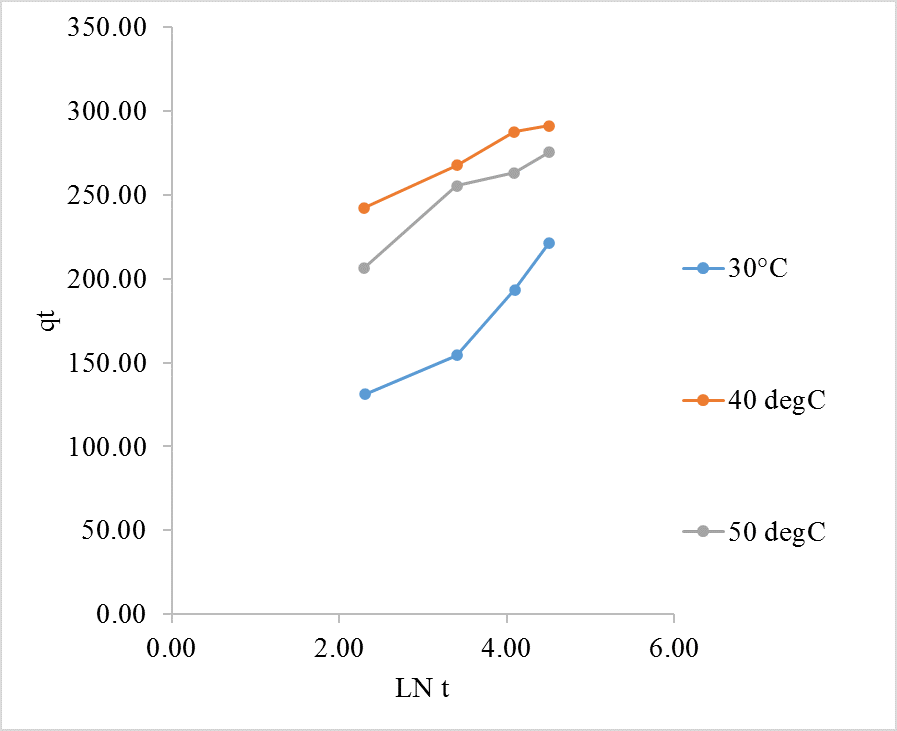
This experimental investigation was conducted to study the synthesis of a clay/iron oxide nanocomposite for the removal of anionic dyes from aqueous media. Batch adsorptive performance tests at various temperatures were evaluated at the optimum conditions of the adsorption parameters for the Clay/Fe3O4 nanocomposite adsorbent of pH, initial dye concentration, temperature, adsorbent dosage, and contact time. From the batch adsorption study, the optimum percentage removal of the anionic RR 198 dye for the Clay/Fe3O4 nanocomposite was obtained at pH 6. The novelty of this study is seen in the unique properties and high removal efficiency of the clay nanocomposite, combined with an iron oxide nanocomposite, with both magnetic and catalytic properties necessary for wastewater purification. The adsorption kinetic data were analyzed using several kinetic models, namely, the pseudo-first-order, pseudo-second-order, and Elovich equations. It was established that the adsorption data fitted well for the pseudo-second-order kinetic model, while the Langmuir isotherm was the best fit for the isotherm models. The evaluation of thermodynamic parameters such as the free energy ∆Gº, enthalpy ∆Hº, and the change of entropy ∆Sº gave negative values, indicating a feasible, exothermic, and spontaneous nature of the reaction.