Prediction of Welding Parameters to Minimize Undercut Defects in Arc Welding Using Response Surface Methodology (RSM): A Robust Multi-Factorial Analysis
Keywords:
GMAW, Undercut defect, RSM, Welding optimization, Process parameters, Statistical modelingAbstract
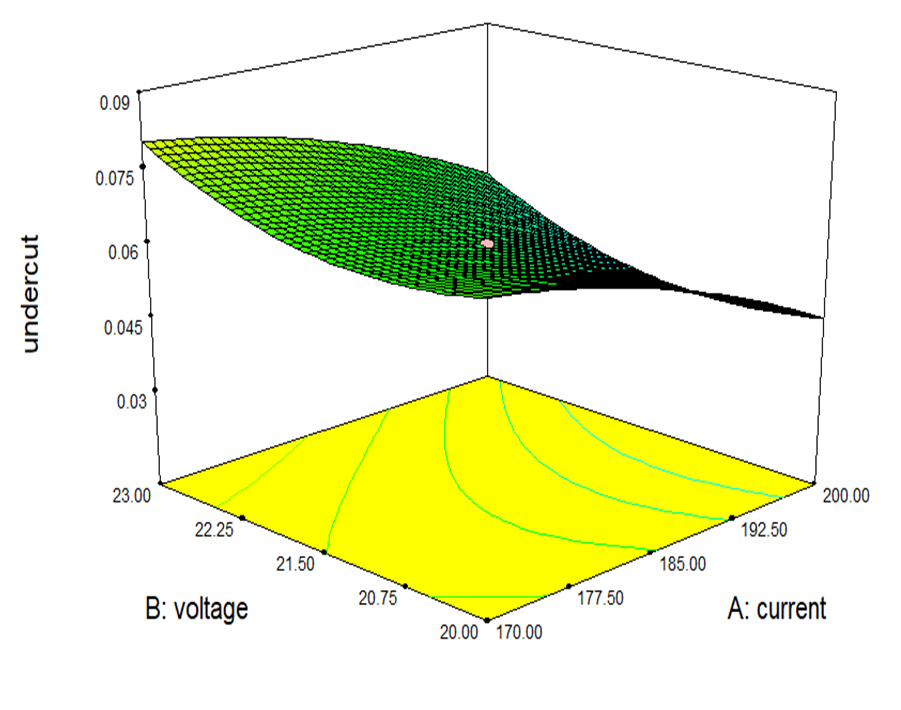
Undercut defects in gas metal arc welding (GMAW) compromise weld integrity and structural performance, leading to increased rework costs and potential safety risks. Traditional trial-and-error approaches for parameter optimization are inefficient and lack scientific rigor. This study aims to systematically investigate and optimize welding parameters (current, voltage, and speed) to minimize undercut defects in low-carbon steel welds using a data-driven approach. The research employed Response Surface Methodology (RSM) with a face-centered central composite design, conducting 20 experimental runs to analyze parameter effects. Advanced statistical tools, including ANOVA and regression analysis, were used to develop a predictive model and identify optimal welding conditions. The quadratic model demonstrated exceptional accuracy (R² = 0.998) in predicting undercut formation, with welding speed emerging as the most influential parameter. The study successfully identified optimal parameters (200 A, 21.5 V, 85 mm/sec) that reduced undercut by %, providing a reliable framework for quality improvement in industrial welding applications. These findings recommend adopting RSM-based optimization to enhance weld quality while reducing production costs. Future work should explore the model's applicability to other materials and joint configurations.