Security Assessment of Nigeria’s 330 KV Transmission Grid Using Newton-Raphson Load Flow Method
Keywords:
Contingency analysis; Power system security; Newton-Raphson load flow; Voltage stability; Transmission grid; Nigerian power network; ETAP simulation; corrective actionsAbstract
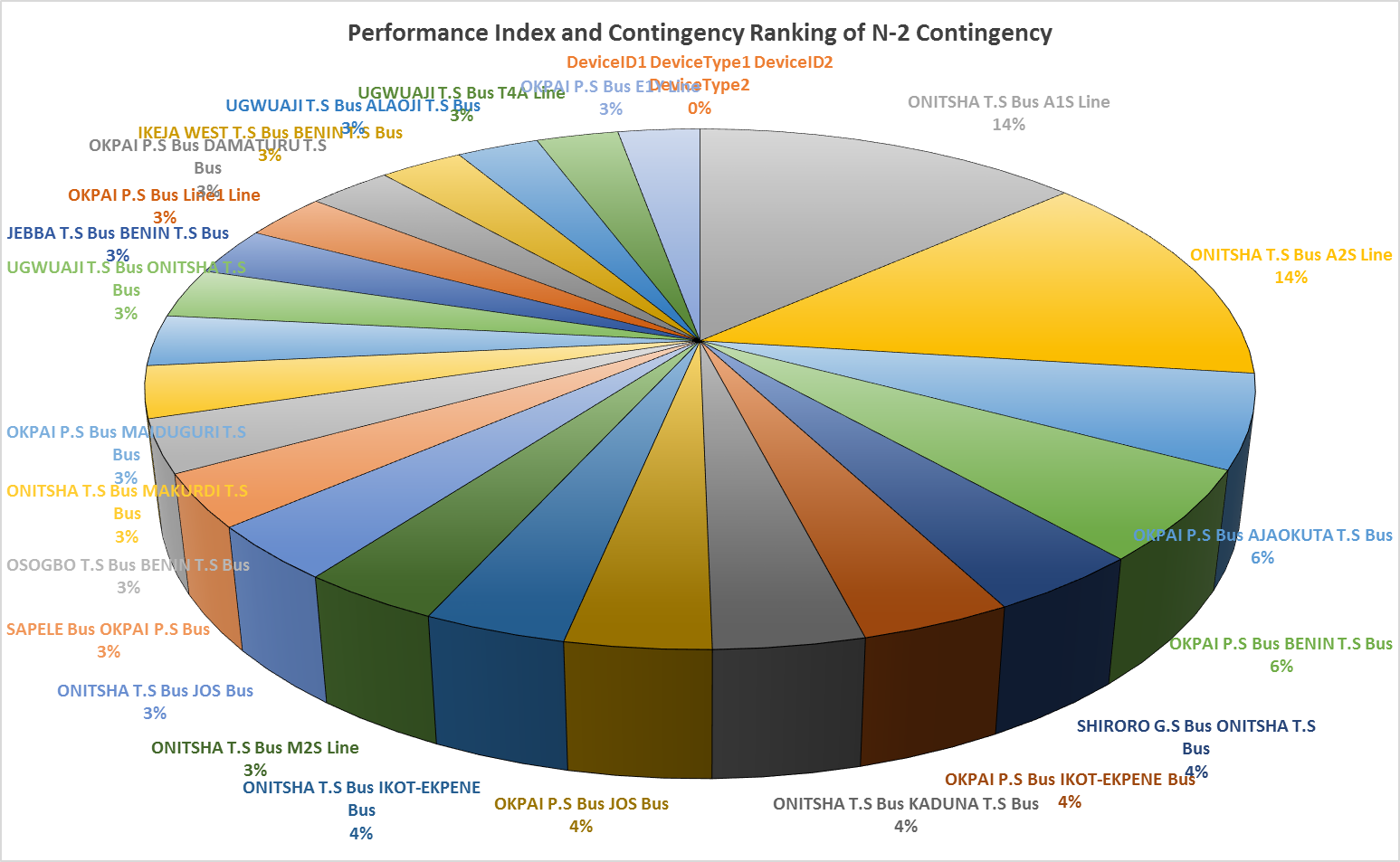
This study investigates the security of Nigeria’s 330 KV transmission network through contingency-based analysis using the Newton-Raphson Load Flow (NRLF) method in ETAP. The modeled grid, consisting of 58 buses, 17 generating stations, and 24 major load centers, was subjected to single and double outage scenarios to assess its operational limits under stress conditions. The results, presented mainly through contingency rankings, highlight critical events that cause severe voltage depressions and overloading of key transmission corridors, particularly in the northeastern and north-central regions. These findings underscore the vulnerability of the grid to cascading failures if left unmitigated. The analysis also demonstrates that applying corrective measures such as shunt compensation, circuit reinforcement, and selective load shedding can substantially reduce the number and severity of violations. The study provides data-driven evidence to guide operational planning and policy interventions aimed at improving the resilience of Nigeria’s high-voltage transmission infrastructure