Compatibility of Advanced Emission Control Systems with Alternative Fuel Blends: Selective Catalytic Reduction, Oxidation Catalysts and Exhaust Gas Recirculation Performance
Keywords:
Advanced Emission Control Systems, Alternative Fuel Blends, Selective Catalytic Reduction, Oxidation Catalysts and Exhaust Gas Recirculation PerformanceAbstract
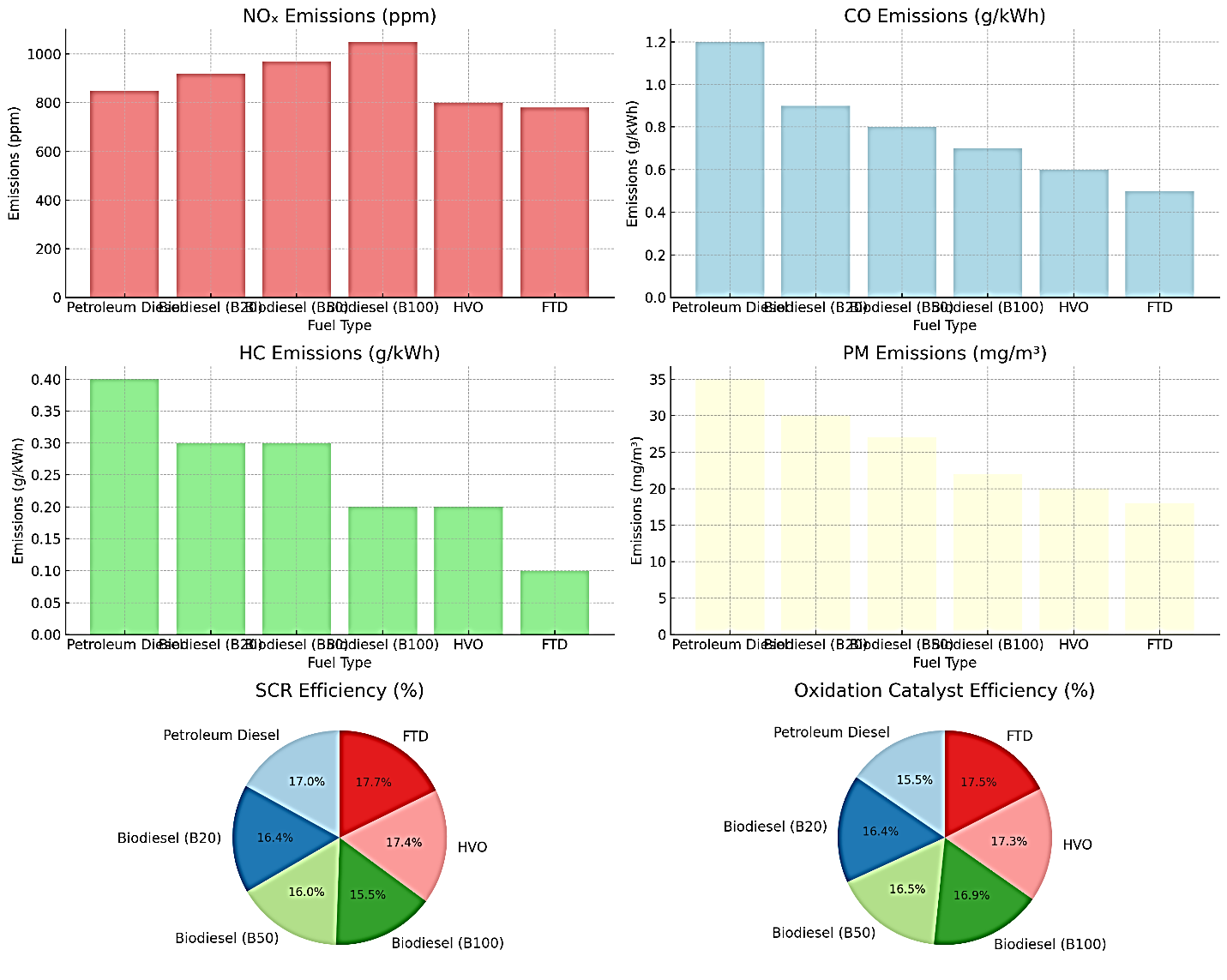
The rising demand for alternative fuels in the automotive industry, driven by sustainability and environmental regulations, has intensified research on the compatibility of advanced emission control systems (AECSs) with these fuels. This study investigates the performance of Selective Catalytic Reduction (SCR), Oxidation Catalysts (OCs), and Exhaust Gas Recirculation (EGR) when used with biodiesel, Hydrotreated Vegetable Oil (HVO), and Fischer–Tropsch Diesel (FTD). Experimental testing, combined with statistical modelling using analysis of variance (ANOVA, p < 0.05) and multiple regression analysis, was employed to evaluate nitrogen oxides (NOₓ), carbon monoxide (CO), hydrocarbons (HC), particulate matter (PM), and fuel economy. MATLAB and SPSS facilitated data processing and ensured statistical rigor. Results indicate that biodiesel blends significantly reduce CO and PM emissions (p < 0.05) but tend to increase NOₓ emissions, particularly at higher concentrations (e.g., B100), highlighting the need for optimized SCR and EGR operation. In contrast, HVO and FTD enhance combustion efficiency, resulting in statistically significant reductions in NOₓ, CO, and PM (p < 0.05). SCR and OCs perform optimally with these cleaner-burning fuels, while EGR demand remains comparatively low. Overall, the findings demonstrate that integrating advanced SCR configurations, fuel-specific oxidation catalysts and optimized EGR strategies can maximize emission reductions and fuel efficiency, supporting the automotive sector’s transition toward cleaner, regulation-compliant propulsion systems.