Comparative Performance Analysis of Smart Drip Irrigation System (SDIS) and Conventional Irrigation System (CIS) for Sustainable Agricultural Production
Keywords:
Smart drip irrigation system (SDIS), Conventional irrigation system (CIS), Wireless sensor networks, Sustainable agriculture, Soil moisture monitoringAbstract
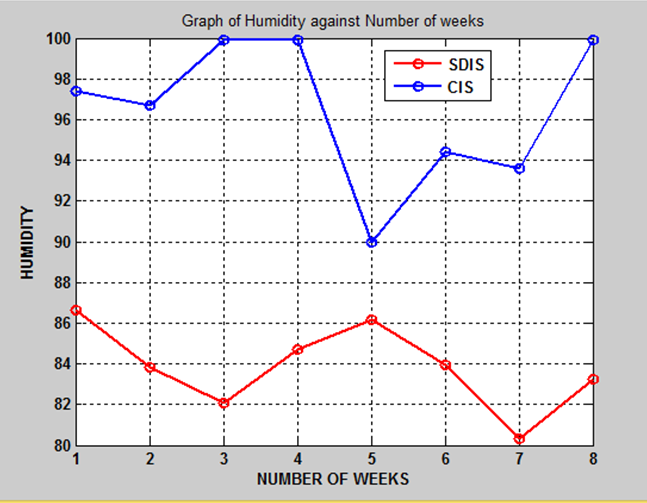
Sustainable agricultural production relies heavily on efficient water management and precise irrigation control. Adaptability with respect to the soil moisture target range, describes the extent to which an irrigation system respond to variations in soil water content to maintain optimal conditions for crop growth. This study presents a comparative performance analysis of a Smart Drip Irrigation System (SDIS) and a Conventional Irrigation System (CIS) with the aim of evaluating their effectiveness in promoting sustainable crop production. In this study, tomato crops were used for the experiment and the experiment lasted for two (2) months (March to April, 2025). The SDIS integrated smart sensors, microcontrollers, and automated control algorithms to monitor soil moisture, regulate water flow, and minimize wastage, while the CIS operates on manual or time-based irrigation scheduling. Experimental data were obtained under similar environmental and soil conditions to assess parameters such as soil moisture stability and percentage improvement in adaptability. The result revealed that SDIS maintained optimal soil conditions of 57.14% more adaptable compared to CIS. This means that the SDIS significantly improved soil moisture uniformity compared to the CIS. Furthermore, the smart system achieved higher irrigation precision and percentage improvement in adaptability, highlighting its potential for improving sustainability in water-scarce agricultural regions. The findings demonstrated that adopting smart irrigation technologies such as SDIS can play a vital role in achieving soil optimal conditions for precision irrigation management and sustainable agricultural production.