Kinetic modeling of Biogas Production from Catalyzed Goat Dung
Keywords:
Mesophilic, Biogas, Goat dung, Silica gel, KineticsAbstract
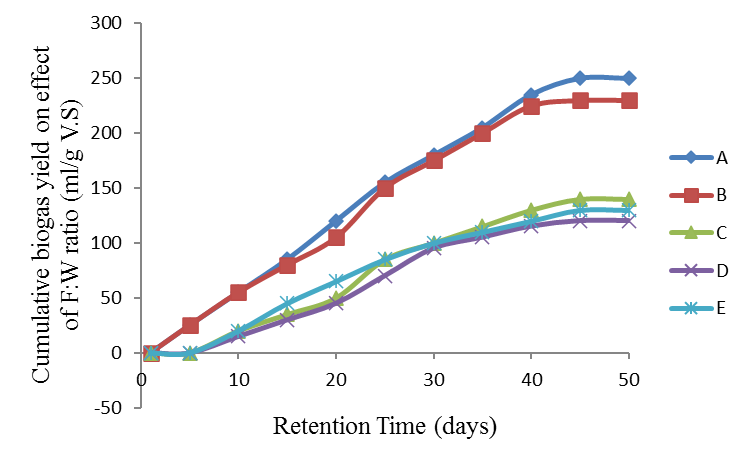
The process of anaerobic digestion (AD) is an effective economic and environmentally friendly method due to its features such as reducing the volume of waste, destroying pathogens, consuming less energy, and producing biogas rich in energy and fertilizer. This study was conducted on a pilot scale with a reactor volume of 3 L in 40 days under mesophilic condition 33 ±2 oC. The anaerobic digestion is a process widely recognized as an interesting alternative for the treatment and stabilization of residual organic substrates. In this present work anaerobic digestion process of goat dung was analyzed for 40 days under mesophilic condition and three process parameters (substrate dosage, pH and feed/water ratio) were studied. This research showed that the optimal conditions for biogas production from goat dung were dosage at 500g, pH at 7.3 and feed-to-water ratio at 1:4, (yield of 505 ml, 500 ml and 250 ml respectively) at time 40 days. The modified Gompertz model was the most accurate and better described the anaerobic digestion process correlation coefficient (R2 = 0.9990).