Comparative analysis of the efficiencies of dye sensitized solar cells from leaf extracts as dye sensitizers
Keywords:
Dye Sensitized Solar Cells, dye sensitizers (leaf extracts), Solar Cell Efficiency, Anthocyanin, Chlorophyll, and Betalain pigments.Abstract
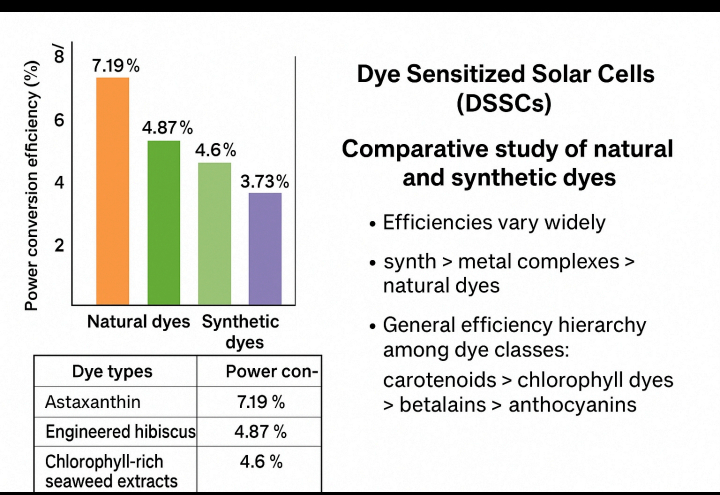
This review summarizes recent Dye Sensitized Solar Cells (DSSCs) studies using a systematic literature survey and comparative data-table analysis covering natural, synthetic, and metal-based dyes. Reported efficiencies varied widely, with the highest values including 7.19% for astaxanthin, 4.87% for engineered hibiscus, and 4.6% for chlorophyll-rich seaweed extracts. Co-sensitized systems also showed improvements, reaching 3.73%. Overall, natural dyes performed lower than synthetic and metal complexes, but clear trends emerged among dye classes. The general efficiency hierarchy observed is: carotenoids > chlorophyll dyes > betalains > anthocyanins. These trends agree well with existing literature.
Downloads
Published
2025-12-27
Issue
Section
Articles
