Agrivoltaics for Irrigation Sustainability: A Case Study of Aguata Agricultural Zone, in Anambra State, Nigeria
Keywords:
Agrivoltaics, irrigation sustainability, solar energy, sustainable agriculture, AguataAbstract
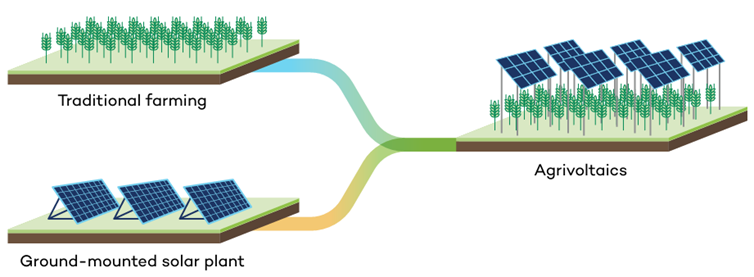
Agrivoltaics offers an integrated solution to water scarcity, energy poverty, and agricultural intensification within the water-energy-food nexus. This study assessed agrivoltaic potential for improving irrigation sustainability in Aguata Agricultural Zone, Anambra State, Nigeria. A cross-sectional survey of 376 agricultural stakeholders, selected through stratified random sampling, evaluated current irrigation practices, awareness, adoption willingness, and perceived importance of agrivoltaics. Results revealed heavy dependence on rain-fed farming (82%), high vulnerability to seasonal water shortages, and critically low awareness of agrivoltaics (79%). Despite this gap, respondents demonstrated strong acceptance, with 84% acknowledging its importance for irrigation sustainability and 86.7% willing to adopt if supported. Inferential analysis revealed significant associations between educational attainment and willingness to adopt (χ²=18.64, p<0.01), farming experience and willingness to adopt (χ²=14.27, p<0.05), and occupation type and perceived importance (χ²=16.91, p<0.01). Correlation analysis showed positive relationships between awareness and willingness to adopt (r=0.31, p<0.01), while logistic regression identified tertiary education (OR=3.46, p<0.01), farming experience (OR=1.06, p<0.05), and awareness (OR=4.14, p<0.01) as significant predictors of adoption willingness. Key barriers included high capital costs, limited technical capacity, and land tenure constraints. The study concludes that agrivoltaics can enhance irrigation sustainability by providing renewable energy for water pumping, moderating microclimates, and improving land and water productivity. Findings underscore the need for targeted awareness campaigns, pilot projects, enabling policies, financial incentives, and capacity building to facilitate adoption in smallholder farming systems.