Evaluating the impact of moisture content on the Foundry performance of Eco-friendly sand from Nyama River Beach for Sustainable Casting Applications
Keywords:
Eco-friendly sand, Foundry performance, Moisture content, Edda clay, Mechanical propertiesAbstract
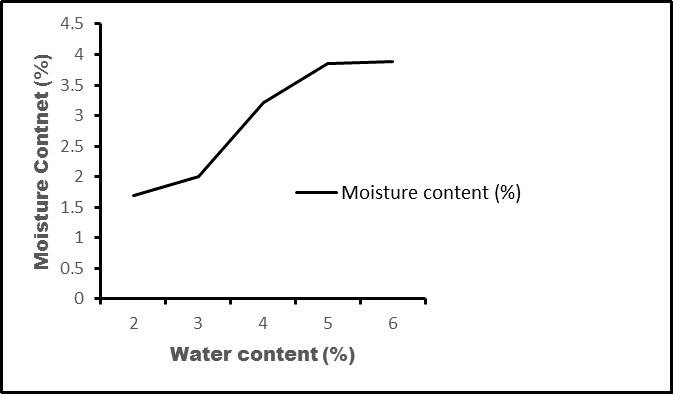
This study evaluates the effect of moisture content on the foundry performance of eco-friendly sand derived from Nyama River Beach for sustainable casting applications. The objective was to determine the suitability of locally sourced sand combined with Edda clay as a binder for environmentally sustainable moulding sand. Grain size distribution was analyzed using a mechanical sieve shaker, showing that more than 70% of the sand particles were retained at key mesh sizes of 0.18 mm, 0.125 mm, and 0.09 mm. The calculated grain fineness number (GFN) of 73.80 indicates an optimal grain distribution suitable for foundry applications. Chemical characterization using X-ray fluorescence (XRF) and X-ray diffraction (XRD) revealed the major oxide compositions as SiO₂ (73.64%), Al₂O₃ (7.98%), and MgO (1.45%), confirming the silica-rich nature of the sand. Foundry performance was evaluated through tests including green compressive strength, green shear strength, dry compressive strength, dry shear strength, compactability, and permeability. The results showed a green compressive strength of 9.50 kN/m² and green shear strength of 236.40 kN/m², indicating good mechanical stability under moist conditions. Compactability and permeability were recorded at 26.10% and 190.09%, respectively, demonstrating adequate moulding and drainage properties. The optimal composition was achieved with 5% Edda clay and 3.85% moisture content, which significantly improved the moulding characteristics of the sand. The findings indicate that Nyama River sand, when properly conditioned with Edda clay, can serve as a sustainable alternative to conventional bentonite-bonded moulding sand, particularly for non-ferrous casting applications, while promoting environmental sustainability and reducing dependence on non-renewable material