Effect of Palm Stalk Ash Reinforcement on the Microstructural, Thermal and Mechanical Properties of Ugwuoba Clay for Refractory Applications
Keywords:
Ugwuoba clay, ceramic, foundry, crucible, palm stalk ashAbstract
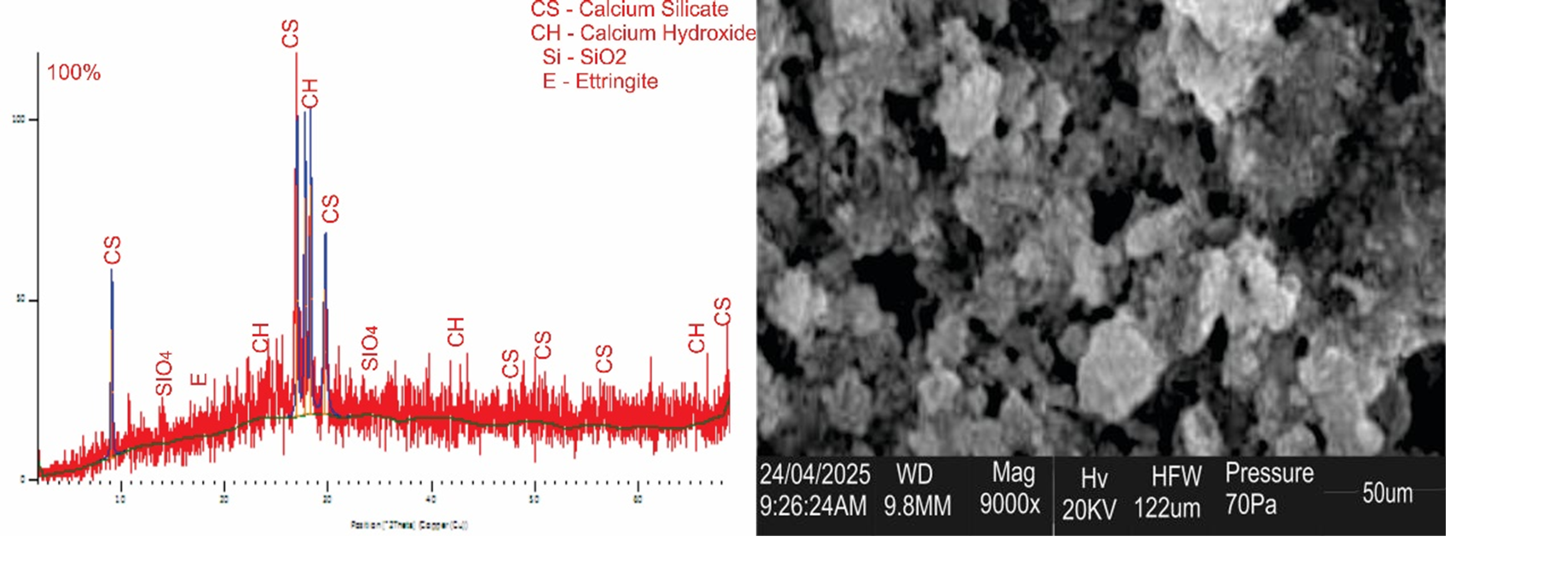
The growing demand for sustainable refractory materials has stimulated interest in the utilization of agro-waste additives for enhancing the performance of clay-based ceramics. In this study, Ugwuoba clay reinforced with 20.66 wt.% Palm Stalk Ash (PSA) was investigated to evaluate its suitability for foundry crucible applications. The clay–PSA composite was prepared, shaped, and fired at temperatures ranging from 1100 °C to 1200 °C, and its microstructural, mineralogical, physical, thermal, and mechanical properties were scientifically examined. Microstructural analysis revealed that PSA incorporation modified the clay matrix by introducing a heterogeneous but well-bonded structure, while X-ray diffraction confirmed enhanced formation of thermally stable calcium silicate and silica-rich phases. Apparent porosity and water absorption decreased with increasing firing temperature, accompanied by a corresponding increase in bulk density, indicating improved densification. Linear shrinkage results demonstrated accelerated sintering attributable to the fluxing action of PSA. Thermal conductivity exhibited temperature-dependent behaviour governed by porosity reduction and microstructural consolidation. Thermogravimetric analysis showed minimal mass loss beyond the dehydration and organic decomposition stages, confirming good thermal stability at elevated temperatures. Cold crushing strength increased significantly with firing temperature, reflecting enhanced mechanical integrity and load-bearing capacity. Overall, the results demonstrate that reinforcement of Ugwuoba clay with 20.66 wt.% PSA improves thermal stability, mechanical strength, and densification characteristics, making the composite a promising, sustainable candidate for foundry crucible and other high-temperature refractory applications.