An Intelligent Facial Recognition System Developed for Insurgency Investigation and Surveillance Applications Using Deep Learning Techniques
Keywords:
Facial Recognition; Artificial Intelligence (AI); Deep Learning; YOLOv8; FaceNet.Abstract
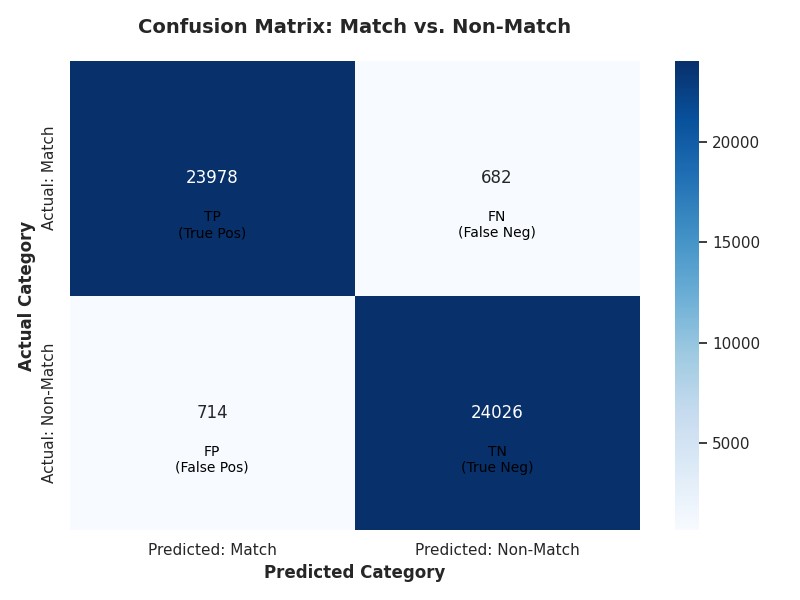
In this paper, we report the development and performance evaluation of a smart facial recognition system for insurgency investigation and monitoring. The system uses state-of-the-art deep learning methods, including You Only Look Once version 8 (YOLOv8) for real-time face detection and FaceNet with triplet loss for extraction and matching. The system was trained and evaluated using a large dataset, CASIA-WebFace, with 494,414 images of 10,575 individuals. The system is built upon the Extreme Programming (XP) development process, allowing for iterative development, testing and responsiveness to security needs. The system was deployed on a cloud platform with GPUs to accelerate the model training and inference process. The evaluation results show that the proposed system is efficient and effective under different practical scenarios. The face detection module has an overall mean Average Precision ([email protected]) of 94.4% with real-time processing speed, while the face recognition module has an accuracy of 96.9%, Area Under the Curve (AUC) of 0.992, and Equal Error Rate (EER) of 3.1%. The system performed well in extreme conditions such as low resolution, occlusion and pose variations. These results demonstrate the potential of combining deep learning-based detection and recognition models for accurate person identification. Our next steps include further optimising performance in extreme scenarios, minimising computational demands, and introducing explainable AI methods to make the system more transparent and interpretable.