Influence of Web Thickness on the Compressive Strength of Sandcrete Hollow Blocks
Keywords:
Web thickness, Hollow sandcrete block, Compressive strength, Water absorption, Curing techniques, Cementsand ratio.Abstract
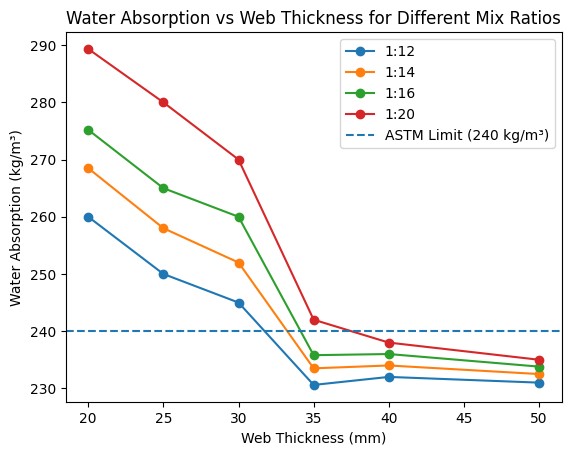
The prevalence of buildings with poor structural stability in developing nations like Nigeria is a growing concern, primarily driven by the use of substandard construction materials. As two-cell hollow sandcrete blocks are a dominant masonry unit in the region, understanding the impact of their geometry—specifically web thickness—on structural integrity is critical. This study investigates the influence of varying web thicknesses (20 mm, 25 mm, 35 mm, 40 mm, 45 mm, and 50 mm) on the engineering properties of nine-inch sandcrete blocks produced with different cement-sand ratios (1:12, 1:14, 1:16, and 1:20). A total of 216 samples were subjected to three curing regimes: air curing, water sprinkling, and water submersion. Experimental results revealed that bulk density and compressive strength increased with higher web thickness and richer cement content, while water absorption decreased. Bulk density ranged from 1627.49 kg/m³ to 1997.87 kg/m³, and water absorption varied between 230.60 kg/m³ and 289.34 kg/m³. At 28 days, compressive strengths ranged from 0.59 N/mm² to 2.88 N/mm² across different curing methods. The study concludes that blocks with web thicknesses of 35 mm and above met the 2.1 N/mm² compressive strength criterion experimentally, confirming that the NIS 978-mandated minimum of 50 mm for 9-inch load-bearing blocks provide an adequate structural safety margin. Furthermore, water-submerged curing was identified as the most effective method for enhancing block performance. These findings reinforce the importance of strict compliance with the NIS 978 minimum web thickness of 50 mm, alongside richer mix proportions, to ensure structural safety and durability.