Synthesis of Cellulose Based Carbon Dots from African fan palm (Borassus aethiopum) for Corrosion Inhibition of Mild Steel in HCL
Keywords:
Carbon dots, Lignin containing cellulose, synthesis, Borassus aethiopum, corrosion inhibition, mild steel.Abstract
This study investigated the synthesis of lignin-containing cellulose carbon dots (LC-CDs) from African fan palm (Borassus
aethiopum) biomass and their application as eco-friendly corrosion inhibitors for mild steel in 1 M HCl solution. The
cellulose-rich fibres were treated with alkali and converted into carbon dots through hydrothermal synthesis. The prepared
LC-CDs were characterized using UV–Visible spectroscopy, Fourier Transform Infrared Spectroscopy (FTIR),
Transmission Electron Microscopy (TEM), and Scanning Probe Microscopy (SPM). Results confirmed the successful
formation of spherical carbon dots with particle sizes below 10 nm and abundant oxygen-containing functional groups.
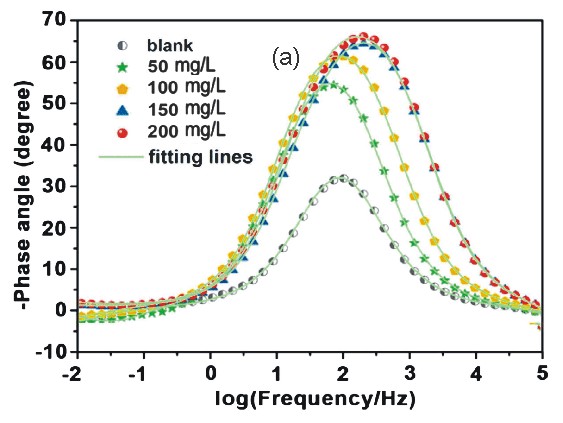
Corrosion inhibition performance was evaluated using weight loss analysis, electrochemical impedance spectroscopy
(EIS), potentiodynamic polarization (PDP), scanning electron microscopy (SEM), energy dispersive spectroscopy (EDS),
and atomic force microscopy (AFM). The inhibition efficiency increased with concentration and immersion time, reaching
optimum efficiencies of 90.8% and 90.7% from weight loss and electrochemical measurements, respectively, at 200 mg/L.
Electrochemical studies showed reduced corrosion current density and increased charge transfer resistance, indicating
effective adsorption and protective film formation on the steel surface. The results demonstrate that African fan palmderived
LC-CDs are sustainable, low-cost, and highly effective green corrosion inhibitors for acidic industrial
environments.