Modelling the Combined Effects of Climate Variables and Land Use Changes on Crop Yields in South-east Nigeria
Keywords:
climate variability; land use change; crop yield; OLS regression; South-east Nigeria; deforestation; agricultural productivity.Abstract
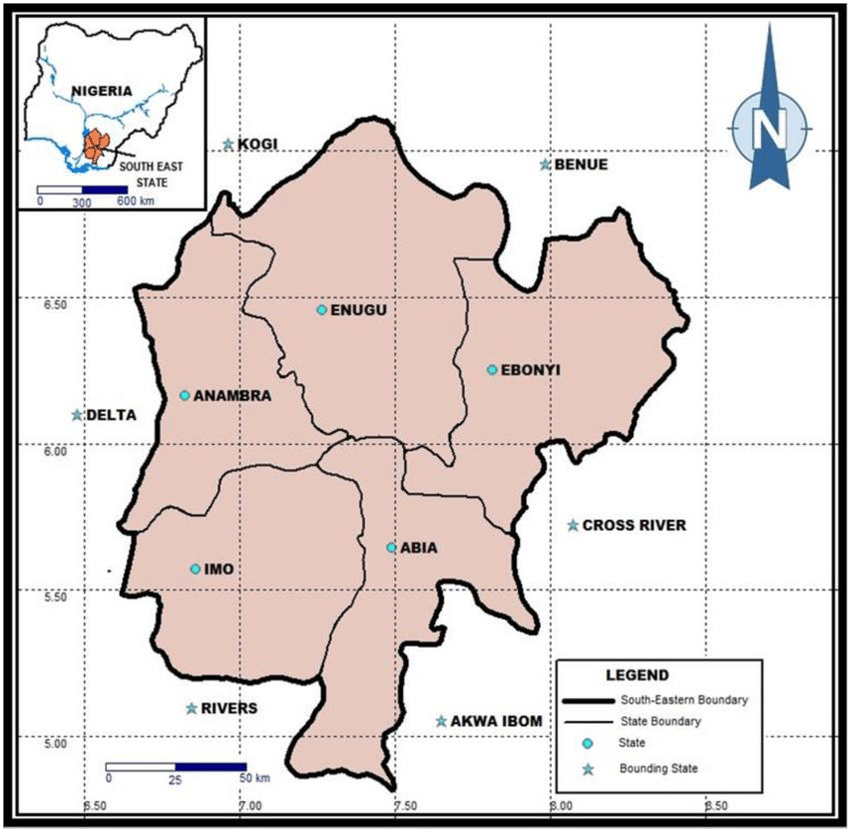
Despite agriculture playing a pivotal role in South-east Nigeria, the combined effect of climatic variability and change of land-use on crop yield is still poorly quantifiable. This study uses a combined OLS regression framework to quantify the individual and interactive impacts of 7 climate variables including, temperature, rainfall, and wind speed, along with land-use changes on the aggregate yields of maize, cassava, yam and vegetable yields in Anambra, Enugu and Ebonyi states from 1980 to 2024. Utilizing data from Nigeria Meteorological Agency (NiMet), Food and Agricultural Organization (FAO), and National Bureau of Statistics (NBS), three validated models were estimated. They include a combined 8-predictor model; a bivariate land-use change model; and a forest area model. The combined model accounted for 96.5% of the yield variation (R2 = 0.965, p<0.001), where the wind speed (β = 7.043, p<0.001) and the area of agricultural land expansion (β = 0.0001, p=0.001) had the dominant significant effects on agricultural output. Most interestingly, the bivariate land-use model found that land-use expansion alone accounts for 90.7% of production variation (R2 = 0.907). Meanwhile, the forest area model demonstrates a near-perfect relationship (r = -0.979, p<0.001) between forest cover and agricultural production. These results imply that the development of agricultural output in the region follows the paradigm of "horizontal expansion" which is a form of deforestation; a pathway that has reached its functional ecological limits. Transitioning to sustainable intensification and enhanced water management is an empirical necessity for regional food security.