A Smart Wireless Hazard Reporting System with Automated SMS Notification for Enhanced Emergency Response
Keywords:
Wireless hazard reporting system, hazard detection, SMS notification, emergency response, Arduino Uno, fire detection, gas leakage detection.Abstract
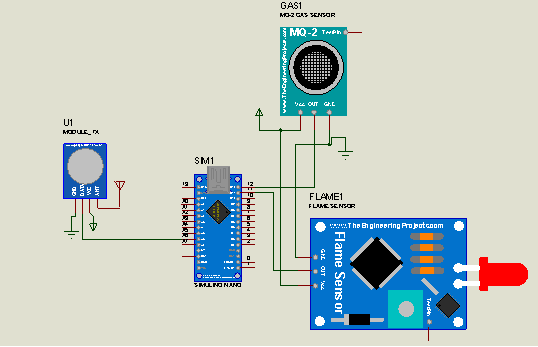
Early detection of hazardous conditions and prompt communication are important in reducing injuries, loss of life and damage to property during incidents such as fire and gas leakage. This study developed and evaluated a smart wireless hazard reporting system that automatically sends SMS notifications when a hazardous condition is detected. The system combined an Arduino Uno microcontroller with a flame sensor, MQ-2 gas/smoke sensor, DHT22 temperature sensor, GSM communication module, audible alarm and LCD display. These components worked together to continuously monitor environmental conditions and provided immediate notification when a possible hazard occurs. Rather than relying on a single sensing device, the design used information from multiple sensors to improve hazard detection and minimise unnecessary alarms. When the system identifies a hazardous condition, it activates a local audible warning and automatically sends an SMS message through the GSM network to predefined emergency contacts. The prototype was developed and tested under controlled laboratory and non-laboratory conditions. Twenty experimental trials were conducted to assess its performance. The collected results were examined using descriptive statistical measures, including the mean, standard deviation, variance and confidence interval. Performance was further assessed in terms of detection accuracy, detection time, SMS delivery time, SMS delivery success rate, false alarm rate and overall system reliability. Results from the twenty trials showed a mean hazard detection time of 0.837 ± 0.016 s and a mean SMS delivery time of 3.226 ± 0.070 s. This produced an average total response time of 4.063 ± 0.073 s. The 95% confidence interval for the total response time ranged from 4.03 to 4.10 s. The relatively narrow interval indicates that the response times remained consistent across the experimental trials. The system also achieved a detection accuracy of 96.7%, a false alarm rate of 3.3% and an SMS delivery reliability of 98%. These results indicate that the developed system can provide a relatively fast and dependable means of detecting hazardous conditions and communicating emergency information. Overall, the developed smart wireless hazard reporting system provides a low-cost and practical approach to improving emergency notification in homes, offices, laboratories, schools, warehouses and light industrial environments. Its reliance on GSM-based SMS communication also reduces dependence on continuous internet connectivity. Future improvements could incorporate cloud-based data logging and artificial intelligence techniques to support historical analysis, intelligent hazard classification and more advanced emergency response functions.