Performance Evaluation of selected Solar Energy Parameters in the Rainy and Dry Seasons for Ten Months period
Keywords:
Dry season, Performances Evaluation, Rainy season, Solar Energy Parameters.Abstract
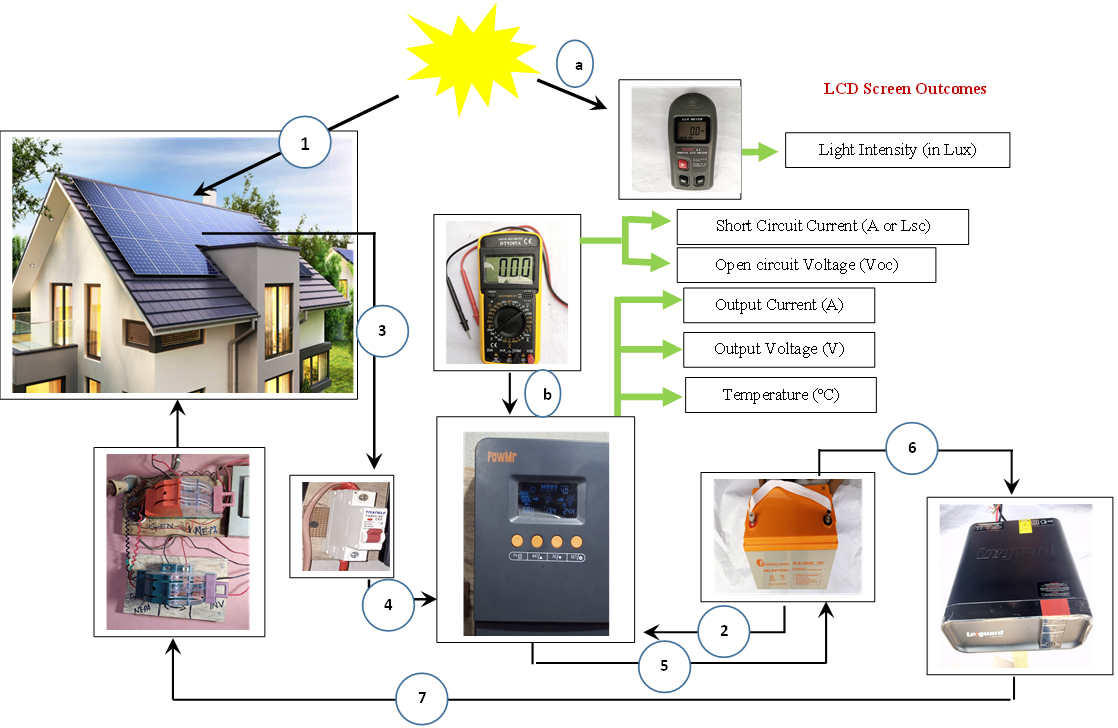
This study evaluated the performance of selected solar energy parameters in the rainy and dry seasons for ten months period. Specifically, the study determined if the relationship between the performances of daily Light Intensity and Maximum Power Point in the rainy and dry season is statistically significant. Conducting the field study in Uruana area of Nibo Community in Awka South Local Government Area of Anambra State, Nigeria between 1st May, 2025 – 28th February 2026 (a ten months period), real time performance data of the selected four (4) solar performance parameters such as Light intensity (lux), Output Current (I), Output Voltage (V), and Maximum Power (Pmax) were collated on hourly basis from 0600hours – 1800hours daily across the Rainy season (1st May, 2025 – 30th September, 2025) and Dry season (1st October, 2025 – 28th February, 2026). These data were further analysed using graphs with the aid of Microsoft excel 2016 package and IBM SPSS version 26 utilizing Pearson correlation analysis statistical tool. Results showed that the level of relationship between the daily performances of Light Intensity and Maximum Power Point was very weak but positive in the Rainy and Dry seasons, though such observed daily performances was statistically significant in the Rainy season but non-statistically significant in the Dry season (p-values 0.000 and 0.138; r 0.389 and 0.033 for Rainy and Dry seasons). The study therefore recommends that there is need to take actionable steps during solar energy system installation to ensure that the solar panels are installed on a height that is easily accessible. This will promote regular removal of soiling during the Dry season and equally upgrade the solar energy system with high efficiency solar cells such as monocrystalline.