Technoeconomic Feasibility of Torrefaction-Densification Value Chains for Sawmill Waste in Sub-Saharan Africa: A Systematic Review and Adjustment-Based Cost-Benefit Synthesis
Keywords:
Densification; Sawmill waste; Sub-Saharan Africa; Torrefaction; Techno-economic analysisAbstract
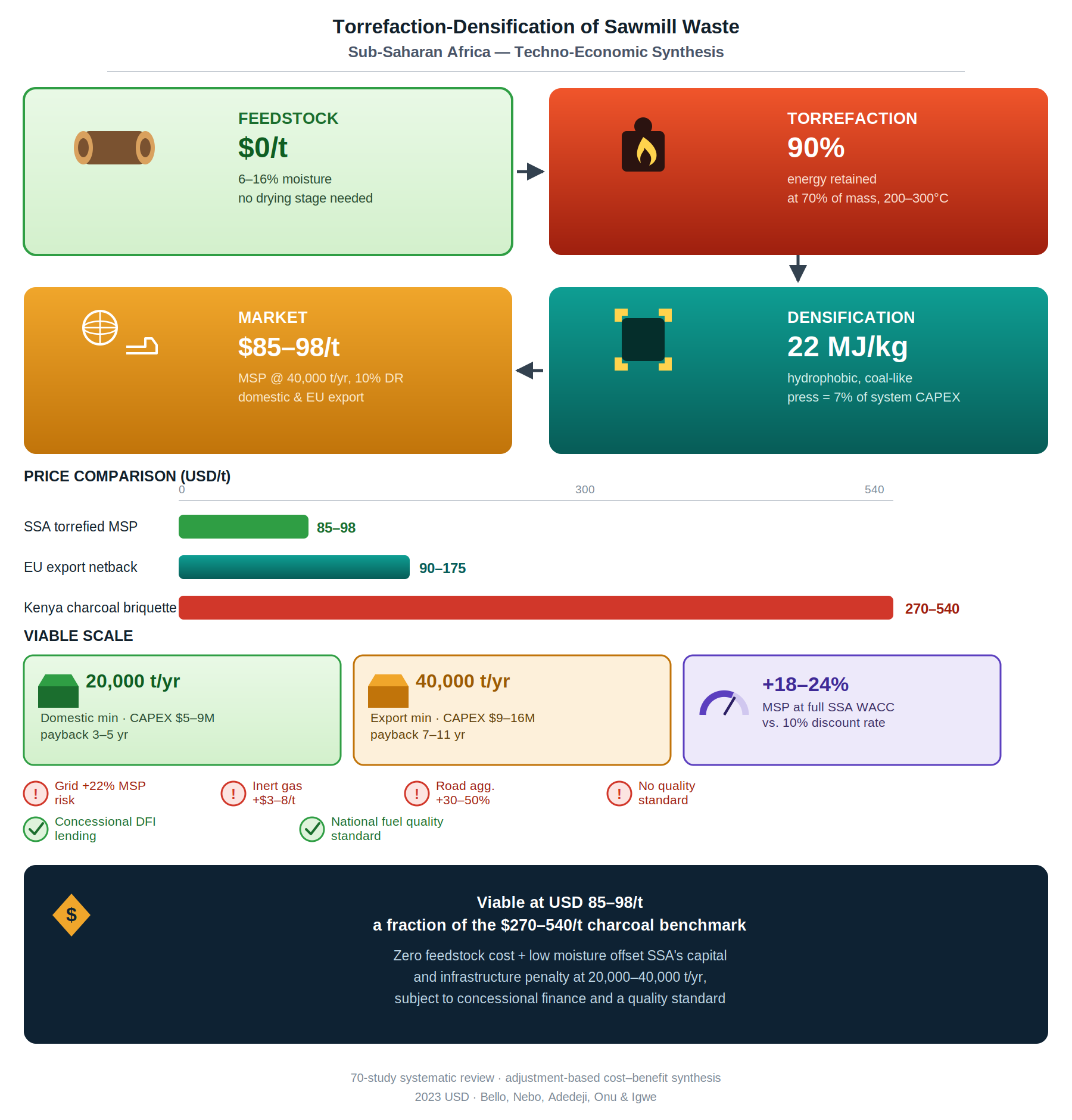
The techno-economic viability of sawmill wastes in Sub-Saharan Africa (SSA) as a precursor for an energy-dense biofuel via torrefaction and densification has been poorly studied. All monetary values in this review, including the abstract, are expressed in 2023 USD unless otherwise stated. This review synthesizes 70 articles to propose a cost-benefit model for torrefied densified sawmill waste in the region, accounting for zero feedstock cost, low labour intensity, and high capital intensity. Five findings are reported: (1) the torrefaction reactor is the largest cost driver, at 34-51% of equipment costs; (2) the low moisture of tropical sawdust (6-16% in West Africa) allows near-complete energy recovery during torrefaction, eliminating external fuel needs; (3) a 40,000 t/yr plant yields a minimum selling price (MSP) of USD 85-98/t at a 10% discount rate and USD 100-122/t at 15% (SSA scenario), versus USD 270-540/t for Kenyan charcoal briquettes; (4) 20,000 t/yr is the minimum profitable domestic scale, while 40,000 t/yr is needed for viable, narrow-margin exports given ISO certification costs; and (5) a 15% discount rate raises MSP by ~18-22% relative to the 10% base case, while the full weighted average cost of capital (WACC) scenario for SSA raises MSP by 18-24% across all sizes. The value chain is techno-economically viable at these cost levels. The review recommends concessionary lending to lower the cost of capital and a national standard differentiating local from imported biomass briquettes at the point of sale.