Development of a Nigeria based weather prediction software using Recurrent Neural Network (RNN)
Keywords:
Weather Prediction, Recurrent Neural Networks, Long Short-Term Memory, Climate Data Analysis, Nigeria Meteorology.Abstract
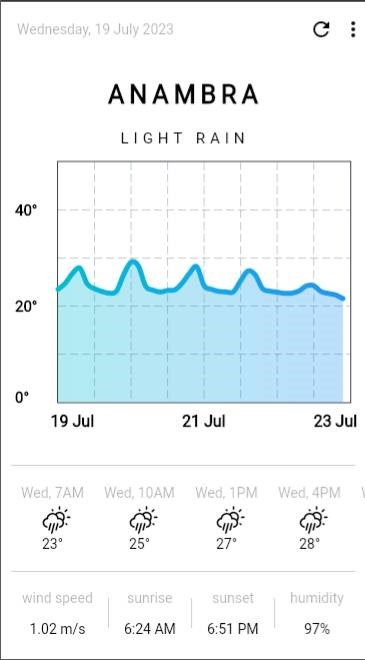
Weather prediction remains a critical challenge in Nigeria due to the country's diverse climatic zones, limited meteorological infrastructure, and the increasing impacts of climate change on agriculture, disaster management, and public safety. This study presents the development of a Nigeria-based weather prediction system utilizing Recurrent Neural Networks (RNNs) with Long Short-Term Memory (LSTM) units to enhance the accuracy and reliability of local weather forecasts. The system leverages historical weather data spanning 15 years (2010-2024) obtained from the Nigerian Meteorological Agency (NIMET), encompassing temperature, humidity, precipitation, wind speed, solar radiation, and atmospheric pressure measurements from six representative stations across Nigeria's geopolitical zones. The LSTM architecture was specifically designed to capture temporal dependencies in weather patterns, addressing the vanishing gradient problem inherent in traditional RNNs. The model was trained using 73.3% of the data (2010-2020), validated on 13.3% (2021-2022), and tested on 13.4% (2023-2024). Performance evaluation demonstrates significant improvements over traditional methods, with the LSTM model achieving a Root Mean Square Error (RMSE) of 1.87°C, Mean Absolute Error (MAE) of 1.42°C, Mean Absolute Percentage Error (MAPE) of 5.23%, and R² of 0.934 for temperature prediction. Comparative analysis shows that the LSTM model outperforms standard RNN (RMSE: 3.24°C), ARIMA (RMSE: 4.12°C), and linear regression (RMSE: 5.67°C) models. The system provides a user-friendly interface for accessing real-time weather updates and forecasts tailored for different regions within Nigeria. This development contributes to meteorological science and supports local communities by providing vital information for decision-making in agriculture, urban planning, and emergency preparedness. Future work will focus on integrating real-time data feeds and enhancing the model with hybrid deep learning architectures for improved predictive power.