Characterisation of Yobe State Quartz Sands for Photovoltaic Cell Production
Keywords:
Quartz sand, Silica (SiO2), Yobe-Nigeria, XRD, EDXRF, SEM, BETAbstract
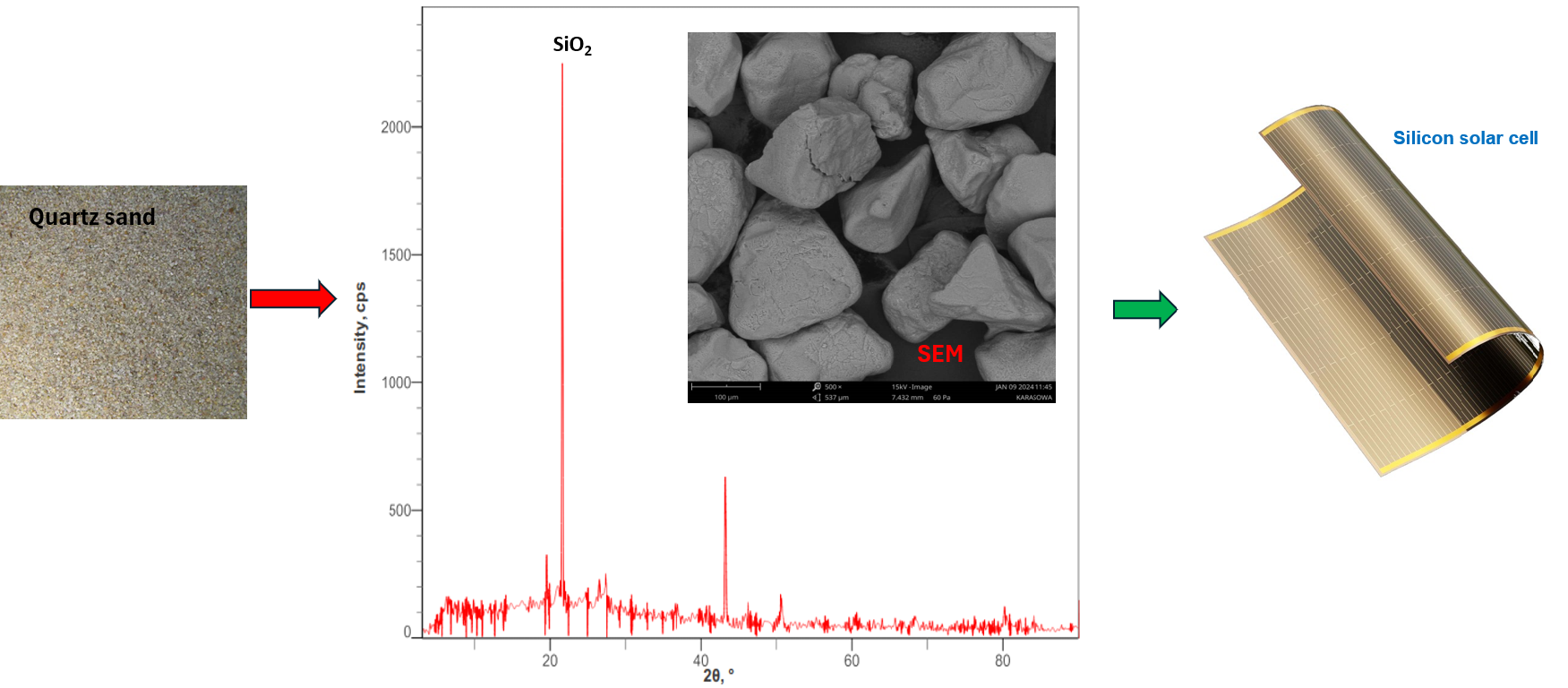
This study investigates the potential of sand obtained from Yobe State, Nigeria, as a local raw material for photovoltaic (PV) cell production by examining its silica content and properties. With the growing demand for renewable energy, particularly solar power, there is a need to explore sustainable, affordable, and locally available materials that can support PV manufacturing in Nigeria. In this study, soil samples were systematically collected from five locations in Yobe State: Nguru, Karasuwa, Gashua, Jakusko, and Machina. The samples were characterised using X-ray diffraction (XRD), Energy-Dispersive X-ray Fluorescence (EDXRF) spectroscopy, Scanning Electron Microscopy (SEM), and Brunauer–Emmett–Teller (BET) analysis. The results showed that the sand samples contain considerable amounts of silica, making them potentially useful for PV-related applications. XRD analysis confirmed the presence of quartz (SiO₂) in the samples. Among the locations studied, the Karasuwa sample recorded the strongest quartz peak, with an intensity of approximately 4000 cps, while the Gashua sample had the lowest intensity at about 2000 cps. EDXRF analysis further confirmed the presence of silica in all the samples, with the highest concentration recorded in the Karasuwa sample at 77.75%. SEM analysis revealed the granular nature of the samples and provided information on their particle size distribution, both of which are important considerations when assessing materials for PV applications. BET analysis also showed that the samples possess appreciable specific surface areas and well-defined pore structures, with the Gashua sample recording the highest specific surface area of 475.095 m²/g. Overall, the findings indicate that sand from Yobe State has promising potential as a locally sourced silica material for PV cell manufacturing. Utilising this resource could help reduce dependence on imported raw materials, lower production costs, and contribute to local industrial and economic development. However, further studies are needed to identify and quantify impurities in the sand and to determine whether the material can meet the purity requirements for large-scale PV cell production. The study highlights the value of investigating locally available resources as part of efforts to promote sustainable development, renewable energy production, and energy security in Nigeria.